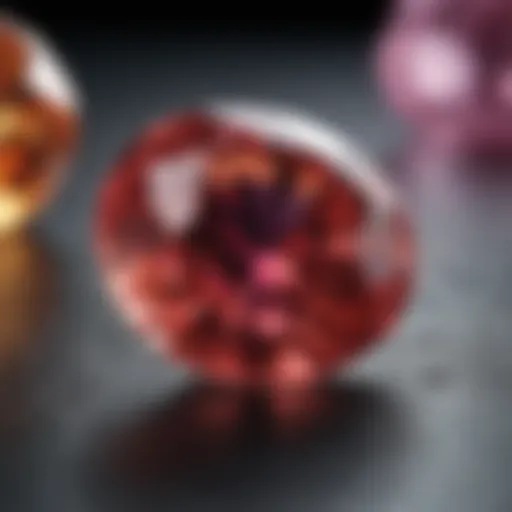
Exploring the Spectrum of Opal Colors and Their Significance
Intro
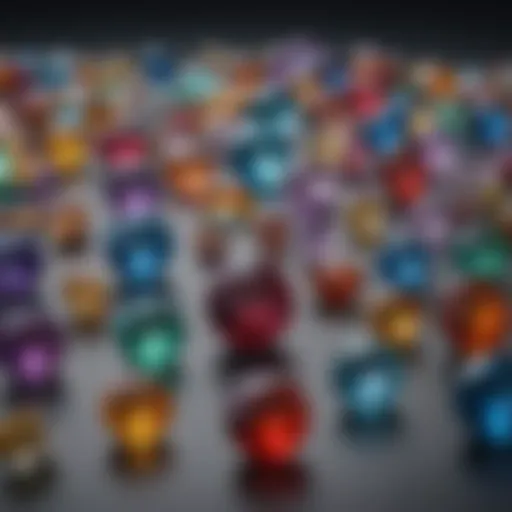
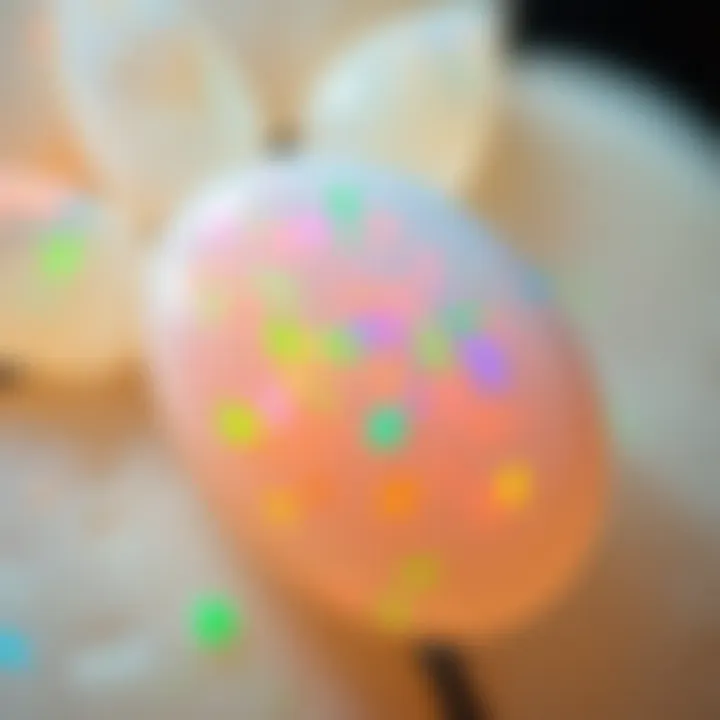
Opals have captured the imagination of many with their remarkable hues and stunning play of light. Often compared to a rainbow, the color spectrum of these gemstones is one of the most diverse seen in nature. But what lies beneath their surface? As we journey through the intricate layers of opal color, we will explore everything from the geological processes that give rise to their beauty to the way different cultures perceive and utilize these captivating stones.
In this exploration, we’ll also look into how opal colors are not just visually appealing, but also carry meanings and symbolism. The multifaceted nature of opals presents a unique canvas for personal expression, especially in jewelry. If you're a collector, designer, or simply someone intrigued by gemstones, understanding opal color can significantly enhance your appreciation and selection process.
So, let’s dive in and unravel the brilliance of opals!
Prologue to Opal and Its Color Spectrum
Opals are a captivating gemstone widely celebrated for their mesmerizing display of colors. The varying tones and shades present in opals are not only stunning but also tell a story of geological history and cultural significance. In this exploration, we will dive into the rich tapestry of opal colors, how they are formed, and why they hold such value in different contexts.
Importance of Opal Colors
Understanding the spectrum of opal colors is crucial for several reasons. For one, colors in opals influence their market value significantly. Collectors and jewelers pay close attention to the shades exhibited by an opal, as these can determine a piece's rarity and desirability. Furthermore, the emotional and symbolic meanings attached to various colors enhance opals' appeal, transforming them into more than just beautiful stones; they become artifacts of sentiment, tradition, and personal expression.
The intersection of geology and aesthetics in opal colors showcases how natural processes can create breathtaking wonders. Each hue reveals the unique conditions under which the opal formed, reflecting variables such as the mineral content of the environment and the way light interacts with the stone's structure. This dual understanding of opal's beauty bridges science and art, making it a particularly engaging topic for gemstone enthusiasts and geology fans alike.
Key Considerations
When discussing opal colors, there are several elements to consider:
- Rarity of Colors: Certain colors are much rarer than others, impacting their value in the gem market.
- Cultural Relevance: Different cultures attribute various meanings to opal colors, affecting their use in jewelry and symbolism.
- Care and Maintenance: The color integrity of opals requires proper cleaning and storage practices to retain their vibrant appearance over time.
This section sets the foundation for a deeper understanding of opal colors. Each opal is unique, and its colors often tell a tale waiting to be discovered. The sections that follow will delve into the historical context and physical properties of opals, laying the groundwork for a comprehensive exploration of this fascinating gemstone.
Understanding Opal Colors
Understanding opal colors serves as a cornerstone of appreciating these unique gemstones. The hues contained within opals tell a story that spans geological time, cultural beliefs, and personal expression. By comprehending the nuances of opal colors, enthusiasts and collectors can make informed decisions, enhancing both the aesthetic and emotional value of their gems. The color of an opal can shift depending on lighting and viewing angle, showcasing a mesmerizing play of tones that captivates admirers. Moreover, every shade can symbolize different attributes or meanings in various cultural contexts, creating layers of significance.
The Nature of Color in Opals
At the heart of opal’s allure lies its colors, which are deeply entwined with the stone's physical structure. Unlike many gemstones, opals do not derive their color solely from inherent mineral content. Instead, the interplay of silica spheres within the gem produces a diffraction of light—a phenomenon known as opalescence. This effect causes colors to spring from deep within a stone, igniting a vibrant spectrum as the viewing angle changes. The presence of tiny, organized silica spheres leads to a play of color that varies with size and arrangement, resulting in everything from a soft pastel palette to a fiery riot of hues.
Classification of Opal Colors
A key factor in understanding opal colors is their classification. Generally, opals are categorized based on their color and appearance. Each type has its distinctive features and appeal.
White Opal
White opals are renowned for their milky backgrounds flecked with vibrant splashes of color. Their predominant light tones allow colors like red, blue, and green to shine brightly, making them popular among collectors. This type is often seen as a symbol of purity and clarity, embodying a serene yet dynamic look that can complement various styles. A notable advantage is their affordability compared to rarer opals. However, their lighter color can make scratches and damage more visible, necessitating careful handling.
Black Opal
Black opals, often prized for their striking darkness and vivid play of color, are truly exceptional. Their deep background allows vibrant colors to pop, especially red and orange. Black opals are sometimes viewed as a more luxurious option and are highly sought after in the jewelry market. The contrast between background and interference colors contributes to their dramatic appearance. While they command higher prices, they do require more attention to avoid damage, as their allure can be diminished if not cared for properly.
Fire Opal
Fire opals are characterized by their warm, glowing shades—typically orange to red—and sometimes feature a striking transparency. Their color can evoke feelings of warmth and passion, making them stand out. Many enthusiasts appreciate fire opals for their unique ability to capture light, resulting in a captivating inner glow. Their unique appeal makes them a favored choice for statement pieces in jewelry. Nevertheless, clarity issues can arise, affecting their market value.
Boulder Opal
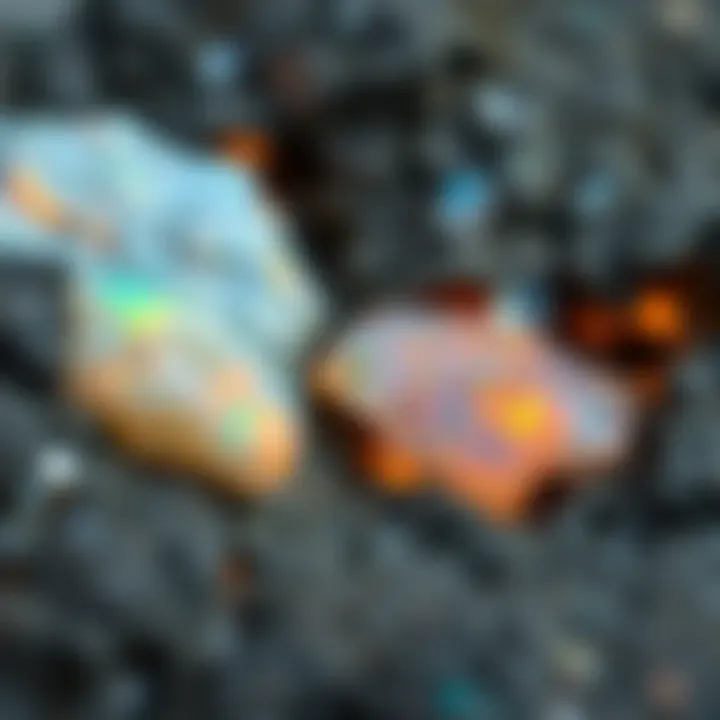
Boulder opals carry the fascinating geology of their surroundings, showing fragments of ironstone and sandstone within. This connection to their host rock adds a rustic charm, making them particularly attractive to those who appreciate natural beauty. The play of color in boulder opals is often vivid and radiant. They are robust, making them a good option for everyday wear, yet their unique formations mean no two stones are alike. Finding the right boulder opal can often involve a treasure hunt, enhancing its appeal to collectors.
"Each opal holds a unique narrative within its colors, reflecting not only geological history but cultural significance."
Understanding the diverse array of opal colors, along with their characteristics and the emotions they evoke, offers a deeper appreciation for these captivating gemstones. Whether for personal adornment or collection, the beauty and complexity of opal colors enhance their role in jewelry and cultural narratives alike.
Geological Influences on Opal Color
Understanding how geology contributes to the mesmerizing colors of opal is key for any gemstone enthusiast or collector. The colors of opal are not merely a visual feast; they are a tapestry woven from the threads of geological history. From the minerals present in the surrounding environment to the conditions under which opals form, each factor plays a crucial role in determining the final appearance of these stones. This segment delves into two main aspects: the formation processes of opal and the impact of environmental elements on coloration.
Formation Processes of Opal
Opal is a mineraloid, meaning it does not have a crystalline structure like many traditional gemstones. Instead, it is formed through a fascinating process that involves the infiltration of silica-rich water into porous rock formations. Over thousands to millions of years, as this water evaporates, it leaves behind deposits of silica.
- Silica Gel to Solid Opal: Initially, silica dissolves in a liquid phase—this is typically due to groundwater activity. When the waters dry up or the pressure decreases, this silica precipitates and forms opal. How quickly or slowly it happens can lead to dramatically different appearances.
- Variability in Temperature and Pressure: During the formation, varying temperatures and pressures can influence the packing structure of silica. Higher temperatures can result in denser formations, producing darker opals, while cooler conditions may yield lighter, more translucent varieties.
This geological journey from water to stone is quite nuanced, and each step brings its own set of influences that contribute uniquely to the opal's color.
Impact of Environment on Opal Coloration
Environmental conditions hold substantial sway over the final hue of opals. The following factors highlight how geological variances affect opal coloration:
- Mineral Composition: The presence of other minerals in the host rock affects the colors seen in the opal. For example, iron oxides may enhance reds and yellows, while copper can introduce greens and blues. In areas rich in specific minerals, the resulting opals are often deeply colored and highly valued.
- Humidity and Temperature: These factors also play a role. Regions with stable moisture levels allow opals to retain their structure, while those exposed to fluctuating conditions may see cracks or color changes over time.
- Location-Specific Characteristics: Different geological locales produce distinctive opals. Australian opals, for instance, are often celebrated for their vibrant colors due to the diverse minerals in the region. In contrast, Mexican opals commonly showcase a more fiery palette, largely influenced by volcanic activity in their formation.
"Each opal tells a story, etched into its very fabric by the geological forces that shaped it."
In summary, to appreciate opal fully, one must understand the geological influences intertwined with its creation. This understanding not only deepens the appreciation for the gemstone but also equips collectors and enthusiasts to make more informed choices. When selecting an opal, recognizing these factors may lead to discovering a gem that resonates on a deeper level, reflecting the intricacies of nature itself.
For more on opal formation and geology, visit Wikipedia or Britannica.
The Science Behind Opalescence
The study of opalescence is key to understanding the captivating nature of opals. This phenomenon is not just a pretty display of colors; it encompasses the very mechanics of light and how it interacts with the unique structure of the opal itself. Knowing how light interacts with opal layers and the intricate details of its structural composition fosters appreciation for this stunning gem. In essence, it’s about comprehending what makes opal one of the most dynamic and diverse gemstones in the world.
Light Interaction with Opal
Light plays a pivotal role in the appearance of opal. When light hits the surface of an opal, it bends because of the refractive properties of the stone. This bending creates a spectrum of colors, which can vary based on the internal structure of the opal. Essentially, opal can be seen as a prism that scatters light in various directions, producing a dazzling array of hues.
Key Factors Influencing Light Interaction:
- Nanoscale Structure: The arrangement of silica spheres in opal directly affects how light is diffracted. These spheres are layered intricately and cause light to break into different colors much like a rainbow.
- Play of Color: This unique term refers to the shifting colors seen when the opal is viewed from different angles. The phenomenon occurs due to microscopic structures that create interference patterns.
- External Light Conditions: The ambiance in which an opal is viewed changes its color display. Natural light compared to artificial light transforms the appearance of the gem significantly.
"Understanding light interaction with opals is like tuning into the symphony of colors only nature can conduct."
Structural Composition of Opal
Opals are primarily made up of silica and water, which is quite different from many other gemstones that are composed largely of minerals. The structure of opal is categorized into two main types: precious opal and common opal.
Precious Opal:
- Contains ordered layers of silica spheres, allowing light to diffract and result in the play of color.
- The arrangement creates a three-dimensional lattice that contributes to the color's vibrancy.
- Has a higher water content, usually ranging from 6% to 10%. This hydrophilic nature makes it more susceptible to dehydration and cracking if not cared for properly.
Common Opal:
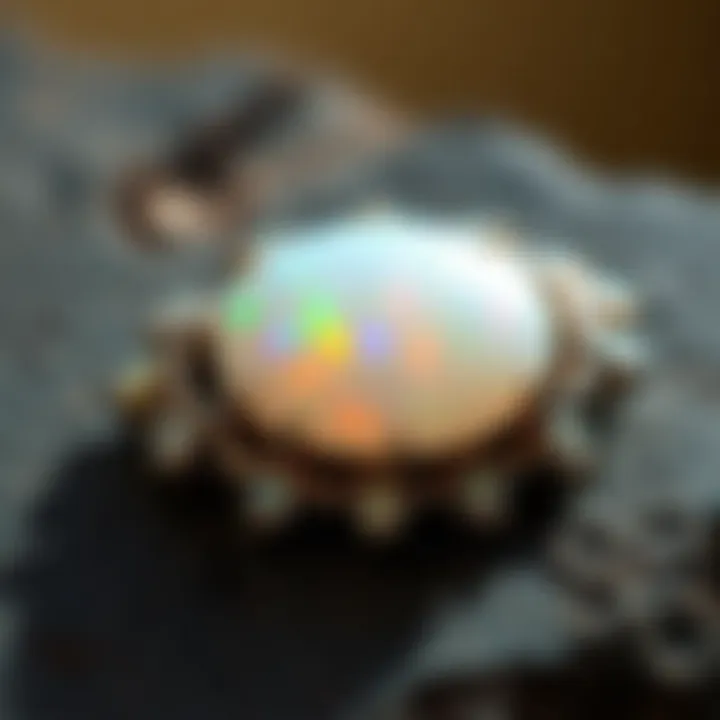
- Lacks the orderly structure of precious opal, emitting a more muted and solid color.
- This type is vital for comparison, showing how structural variance influences overall appearance and desirability.
The encapsulated water and silica in opals forge a bond, giving rise to a beautiful yet delicate gemstone. Awareness of its structural intricacies enables enthusiasts and jewelers alike to appreciate and care for opals more effectively. By diving into this scientific exploration, we gather insights that not only elevate our understanding but also enhance our interactions with these radiant gemstones.
For more in-depth information about gemstones, consider visiting Wikipedia or Britannica.
Cultural Significance of Opal Colors
The cultural significance of opal colors goes far beyond just their aesthetics. Opals have been intertwined with various cultures and societies throughout history, acting as symbols of mystique, divination, and emotional resonance. The spectrum of colors found in opals - from bright oranges and reds to deep blues and greens - has not only caught the attention of gem enthusiasts but has also played a crucial role in shaping beliefs and traditions across different societies.
Mythology and Folklore Surrounding Opal
In ancient cultures, opals sparked the imagination of many. The opal was often viewed as a gift from the gods, a token of divine favor, if you will. For instance, the Romans believed that opals possessed the power to protect against diseases, while the Greeks associated the gem with prophecy and anticipation of the future.
Aboriginal Australian cultures, too, hold opals in high esteem. The stories passed down through generations often link opals to the creation of the earth. In these folklore tales, it is said that opals contain the colors of the rainbow, symbolizing peace and hope after rain.
Similarly, in medieval Europe, opals were considered to have the power to enhance the wearer’s beauty and offered protection against negativity. This view still influences opal’s reputation as a stone of purity and clarity today, often sought after by those hoping to align themselves with positive energies.
The vast array of stories surrounding opals reveals how deeply they are woven into the fabric of human culture and thought. The colors attributed to opals can symbolize various aspects of life, such as love, hope, and enlightenment, imparting a sense of wonder that captures the spirit of humanity across generations.
Opal in Art and Literature
Opals have also carved a niche for themselves in the realms of art and literature. Several famous artists and writers have drawn inspiration from the unique colors and luminosity of opals. They are celebrated not only as aesthetic gems but also as objects embodying depth and complexity.
The Impressionist painter Claude Monet often depicted the vividness of color that can be found in opals, evident in his use of light and shadow in his canvases, while Henry James, a noted writer, weaved descriptions of opals in his narratives, showcasing their beauty and multifaceted nature.
In contemporary times, opals continue to inspire various forms of artistic expression. Writers often use opals as metaphors for mystery and change, suggesting the fluctuating facets of life that reflect the many colors within oneself. Artists depict opals in sculpture, painting, and even digital art, illustrating their ability to transcend mediums.
Research has shown a resurgence in interest in opals within modern jewelry design. Designers often emphasize the color gradations of opals, appreciating their unique qualities that breathe life into jewelry pieces and captivate the wearer.
Through both art and literature, opals signify more than just beauty; they encapsulate stories of cultures, emotions, and experiences that resonate with people across various domains.
"In opals, the colors converge, reflecting the myriad threads of existence woven into the human experience.”
Overall, the cultural significance of opal colors reflects an intricate dance between nature, human emotion, and artistic expression. Whether through mythological tales or modern artistry, opals are a testament to humanity's fascination with beauty and transcendence, urging us to explore the layers beneath the surface.
Opal in Jewelry: Selecting by Color
When it comes to opals, picking the right one for jewelry can be as tricky as herding cats. With a wide array of colors and patterns, understanding the choices available is crucial for anyone—from seasoned collectors to the casual jewelry enthusiast. The beauty of opal is not just skin deep; each hue and shade tells its own story, influenced by geological formation, market trends, and personal preference. Thus, knowing how to select opals based on color can significantly affect their aesthetic value and how they resonate with the wearer.
Choosing the Right Opal for Jewelry
Selecting the right opal for jewelry involves more than just a pretty face. The first consideration is the type of opal—White, Black, Fire, or Boulder—that complements the wearer's personal style and values. Each type presents distinct characteristics.
- White Opal is often characterized by its lighter tones and vibrant play of color against a milky background. Ideal for those who prefer a classic yet lively look.
- Black Opal, with its dramatic contrast and brightness, appeals to those who aren't afraid to stand out. It often has a darker base, which makes the colors appear even more vivid.
- Fire Opal is all about warmth, offering tones of orange and red, which embody passion and energy. Great for anyone who wants to make a bold statement.
- Boulder Opal, embedded in its host rock, boasts unique patterns and earthy hues, perfectly suited for lovers of natural aesthetics.
The opal's color is often linked to its authenticity; genuine opals usually have a depth of color and complexity that synthetic options lack. It’s worth getting to know how to spot fakes. Look for inclusions, for example, as they signify natural formation.
Furthermore, consider the intended use of the opal jewelry. Is it for everyday wear or a special occasion? The answer influences color selection. Day-to-day pieces might benefit from more durable, darker colors, while those for celebrations can flaunt lighter, shimmering options that catch the eye. In this regard, it is imperative to gauge how the light plays on the opal to truly appreciate its beauty.
Setting and Displaying Opal Colors
Once you have chosen the right opal, it’s crucial to understand how to set it in jewelry to enhance its color. The choice of metal and design plays a significant role here.
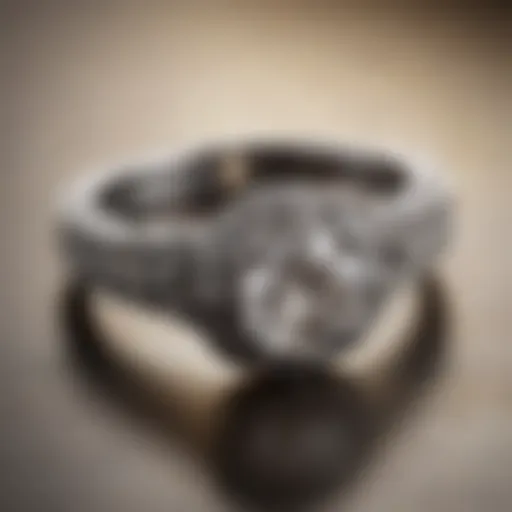
- Metal Choices: Setting opals in yellow gold can warm the vibrant colors, while white gold or silver might make them pop even more. Rose gold adds a twist, giving an earthy tone to fire opals but could diminish the brilliance of lighter opals. Choose wisely based on your color selection.
- Design: The design should showcase the opal's unique characteristics. For instance, a simple solitaire style can allow a stunning black opal’s brilliance to shine. Conversely, a more intricate setting might be better suited to a mosaic pattern that enhances the play of colors in a boulder opal.
"The setting is as important as the stone—both must work together, creating a symphony of color and light."
In showcasing opals, consider also how light interacts with the piece on display. Pendant forms may allow light to reach the stone from various angles, maximally displaying its brilliance. A ring may require additional attention; prong settings can lift the opal for better exposure.
Ultimately, the essence of selecting and displaying opal colors in jewelry lies in the balance of personal style and appreciation of the stone's natural beauty. With these considerations in mind, one can appreciate an opal not just as jewelry, but as a unique piece of art that speaks to the individuality of its wearer.
For more detailed information, you might consider exploring resources like Gem Society, or the comprehensive glossaries found on Wikipedia.
Caring for Opal: Preserving Color Integrity
Opals are not just beautiful gemstones; they are intricate wonders of nature. Caring for an opal, particularly in regard to preserving its color integrity, is absolutely vital for anyone fortunate enough to own one. Color is one of opal's most striking features, and maintaining it ensures that you enjoy the full beauty and brilliance of your gem for years to come. The way an opal is treated after purchase can significantly impact its longevity and aesthetic appeal.
Why Color Integrity Matters
Every opal is unique, with colors that can dance like a flickering flame in sunlight. Protecting these hues from fading or changing over time is essential. This protection goes beyond just the visual aspect—it also preserves the opal's value. An opal that has retained its vibrant colors can be worth significantly more than a faded counterpart. A little know-how goes a long way in caring for these delicate stones.
Cleaning Techniques for Opal
Proper cleaning techniques are crucial if you want to preserve your opal's coloration. Many gems can stand up to a bit of rough treatment, but opal is a different story. Here are key tips for cleaning your opals:
- Mild Soap and Water: Use warm, soapy water with a soft cloth. Avoid harsh chemicals or abrasive materials, as these can scratch or compromise the surface of the stone.
- Avoid Ultrasonic Cleaners: Many cleaners use ultrasonic waves to remove dirt, but for opals, this is risky. The vibrations can loosen the silica structure or alter the opal's internal features.
- Don’t Soak: If you soak your opal, do so for a very short time. Prolonged exposure to water, especially if the gem contains any glue, can cause irreversible damage.
"With opals, gentleness is your friend; rough handling can turn beauty into sadness."
Regularly cleaning your opal will help maintain its sparkle, allowing the vivid colors to shine through unaffected by grime and residue.
Storing Opal to Maintain Color
Storing your opals correctly is just as important as cleaning them. Improper storage can lead to exposure to elements that could dull their colors or cause damage. Here are some strategies to ensure your opals remain as vivid as the day you acquired them:
- Keep Them Separated: Store your opals separately from other jewelry. Scratches from harder stones can ruin the surfaces of opals.
- Use Pouches or Soft Cloth Bags: Placing your opals in soft fabric pouches can help protect them from dust and scratches while allowing them to breathe.
- Avoid Extreme Temperatures: Opals can crack or become discolored if left in extremely hot or cold environments. A cool, dry place away from direct sunlight is ideal.
- Humidity Matters: Since opals are porous, they can lose moisture if kept in very dry conditions. A slight humidity in the air can help keep them in good shape.
In summary, the preservation of color integrity in opals hinges on gentle cleaning methods and careful storage practices. By applying these techniques, you'll ensure that your opal not only retains its stunning colors but also maintains its tangibility and investment worth for years to come.
Metaphysical Properties of Opal Colors
Opals have long been revered not just for their aesthetic beauty, but also for their supposed metaphysical properties. In this section, we’ll delve deeper into the spiritual and healing attributes associated with opal colors. Whether you're a collector or someone curious about the connections between color and spirit, the interplay of opal hues opens a captivating conversation on personal growth, healing, and energy.
Opal and Its Healing Attributes
The allure of opals goes beyond their visual appeal. Many believe that each color within an opal carries distinct energies that can influence a person's mood and health. For instance, white opals are often linked to purity and innocence, promoting peace and tranquility in one's life. It's said that they can help stabilize emotions and alleviate stress.
On the other hand, black opals, with their depth and darker shades, are thought to provide protection and strength. They resonate with the grounding energies of the earth, offering barricades against negative emotions. Collectors often seek these stones out, believing they can absorb and transform challenging situations into positive outcomes.
Moreover, fire opals, characterized by their vibrant orange and red hues, are associated with passion and creativity. Users of these stones often report bursts of inspiration and a boost in confidence, which helps them to pursue new adventures in life. In practice, many gemstone enthusiasts will carry a small fire opal with them, believing it can ignite their inner drive and enthusiasm.
"Color in opals mirrors human emotions; while they shimmer brightly, it’s the energy beneath that captivates the spirit."
However, one must approach these metaphysical claims with a discerning mind. The actual benefits can vary significantly between individuals, based on personal beliefs and experiences. Thus, it’s vital to choose opals that resonate on a personal level, making the experience as meaningful as the colors themselves.
Color Symbolism in Metaphysical Practices
Each color in opals is not merely a sign of beauty but holds symbolic meanings in various metaphysical practices. Understanding these symbols allows enthusiasts to select opals that best align with their intentions.
- Blue Opal: Often associated with communication, it is thought to enhance clarity of thought and expression. Those looking to improve their communicative skills may find this stone particularly beneficial.
- Green Opal: This hue is said to symbolize healing and renewal. It is often used in meditation for emotional healing and to foster growth and balance.
- Red Opal: As a color of deep passion, it’s often believed to inspire emotions of love and joy. Many suggest that wearing a red opal can ignite romantic feelings and vitality in relationships.
- Yellow Opal: Associated with solar energy, this stone is linked to optimism and self-confidence. People often choose yellow opal to ward off negative energy and promote a positive outlook on life.
Incorporating these vibrant stones into daily life or spiritual practices encourages individuals to examine their own paths more deeply, all while celebrating the spectrum of colors found within the opal’s surface. Each wearer can potentially tap into the deeper meanings these colors convey, enhancing personal experiences and encouraging growth along the way.
As opal continues to be discovered and sought after, its metaphysical properties serve as a bridge between the seen and unseen world, where color extends beyond the visual into a realm of emotion and spirit.